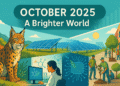
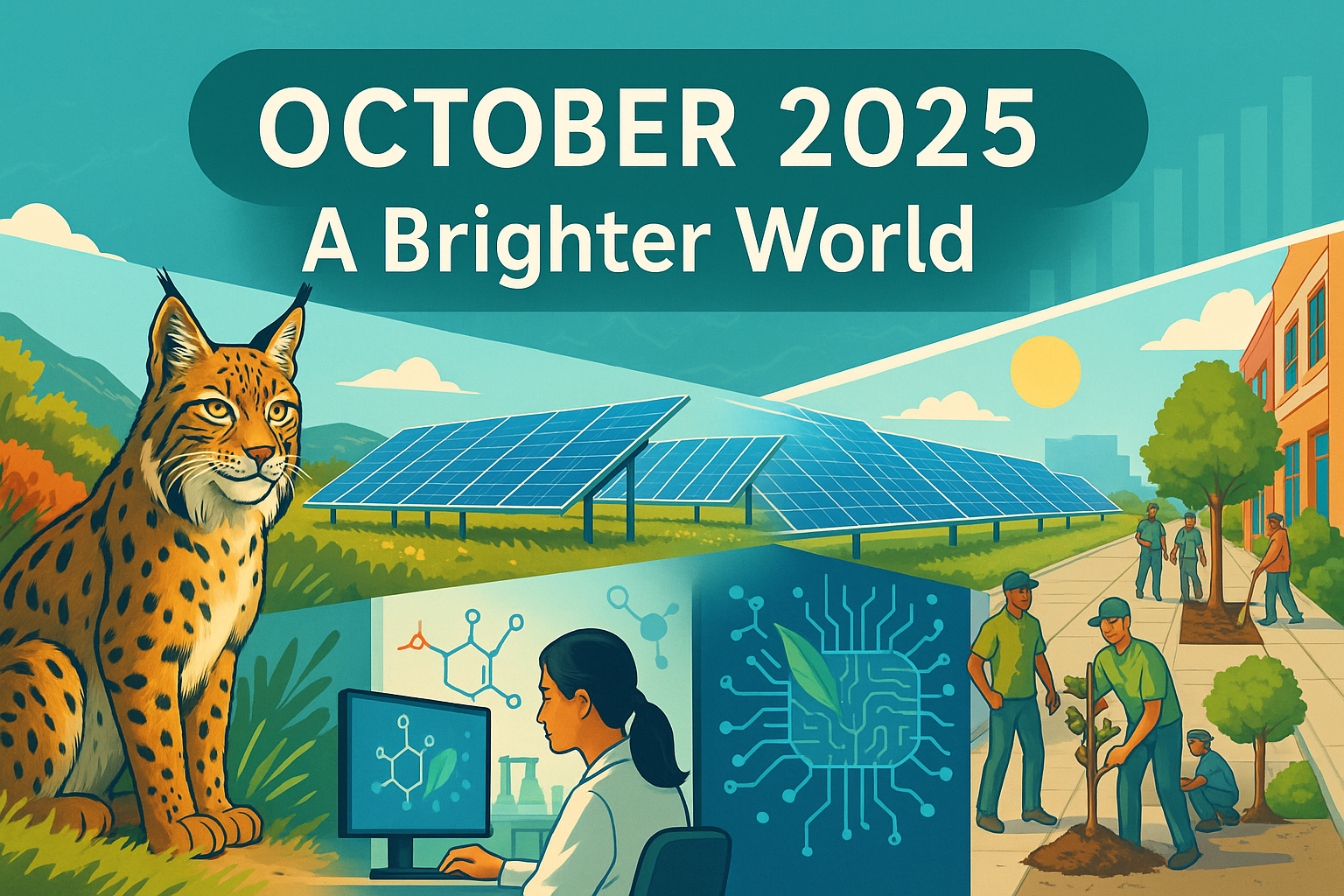
October 2025: A Brighter World
A snapshot of positive momentum from around the globe, providing context and deeper insights.
Conservation Win: Iberian Lynx Population Booms
The "Project Lazarus" rewilding initiative announced a record population for the Iberian Lynx, pulling it back from the brink. This marks a significant downgrade in its threat level from "Endangered" to "Vulnerable." This success demonstrates the power of decades-long, multinational cooperation in conservation.
For decades, the Iberian Lynx was the world's most threatened cat species. Intensive breeding programs, habitat restoration, and reintroduction efforts have been crucial. The milestone of passing 3,000 individuals in the wild is vital for securing genetic diversity and ensuring the species can thrive independently without constant human intervention. Conservationists project that maintaining this growth rate could lead to the species being completely delisted as threatened within the next five to seven years.
Population Growth (2020-2025)
Population Distribution
Tech: "Helios-Wave" Solar Revolution
Researchers at MIT revealed a breakthrough in solar panel technology. Their "Helios-Wave" technique achieved a new world record for efficiency in lab trials, promising cheaper, more effective solar energy and accelerating the global transition away from fossil fuels.
The primary barrier to widespread solar adoption is the cost-to-efficiency ratio. The "Helios-Wave" panels use newly synthesized perovskite materials combined with a novel light-trapping structure. By pushing the lab efficiency to 45%, compared to 22% for conventional commercial panels, the potential energy yield per square meter is nearly doubled. This exponential leap means that rooftop solar installations could become viable in less sunny climates, completely changing the energy landscape.
Solar Panel Efficiency Comparison
Future Impact
The "Helios-Wave" technology is projected to be commercially viable by 2028, driven by lower material costs and streamlined manufacturing processes.
Global Health: AI Accelerates Drug Discovery
In a major step against antimicrobial resistance (AMR), DeepMind's "Synapse" AI model identified five potential new antibiotic compounds by analyzing over 500,000 protein structures, completing a process that traditionally takes years in just one week.
Antimicrobial Resistance is considered one of the biggest global health threats, with current antibiotics becoming less effective against 'superbugs.' Traditional drug discovery is a slow, expensive process. The AI's ability to rapidly screen massive datasets for novel compounds drastically cuts the initial research phase. The five identified candidates now move to preclinical trials, offering immediate hope in the race to develop new therapies before existing medicines fail. This breakthrough validates the use of deep learning in critical biological research.
Community: "Trees for Towns" Hits 5 Million
The global, community-led "Trees for Towns" initiative celebrated planting its 5 millionth urban tree in 2025. The project aims to increase urban canopy cover and is powered by thousands of volunteer groups dedicated to local ecological improvement.
Urban forests play a critical role in mitigating climate change effects in cities, reducing the "urban heat island effect," improving air quality, and managing storm runoff. The successful growth of this initiative highlights a shift towards local, decentralized climate action. While the top five participating nations show strong engagement, the vast "Other" category indicates widespread adoption across developing and developed nations alike, demonstrating genuine global commitment from citizens.
Top Participants (Total Trees Planted in 2025)
Powered by People
This movement is a testament to global citizen action and community stewardship.