A New Dawn for Vision Restoration
A medical breakthrough that once seemed like science fiction is now reality. Scientists have developed a revolutionary eye implant that is helping people who were once completely blind see and read again.
The new retinal microchip was surgically inserted under the retina of 38 blind volunteers as part of a global clinical trial published this week. All participants had age-related macular degeneration (AMD) — a condition that affects the central retina and causes irreversible blindness in millions of people worldwide.
Amazingly, 84% of patients regained partial sight, proving that functional vision can be restored with advanced neuro-engineering.
“It Was Dead Exciting When I Began Seeing a Letter”
One of the trial participants, Sheila Irvine, took part at London’s Moorfields Eye Hospital. Once a passionate reader, she lost her ability to enjoy books due to AMD.
“I was an avid bookworm, and I wanted that back,” she said. “It was dead exciting when I began seeing a letter. It’s not simple, learning to read again, but the more hours I put in, the more I pick up. Reading takes you into another world, I’m definitely more optimistic now.”
How the Device Works
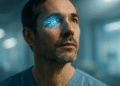
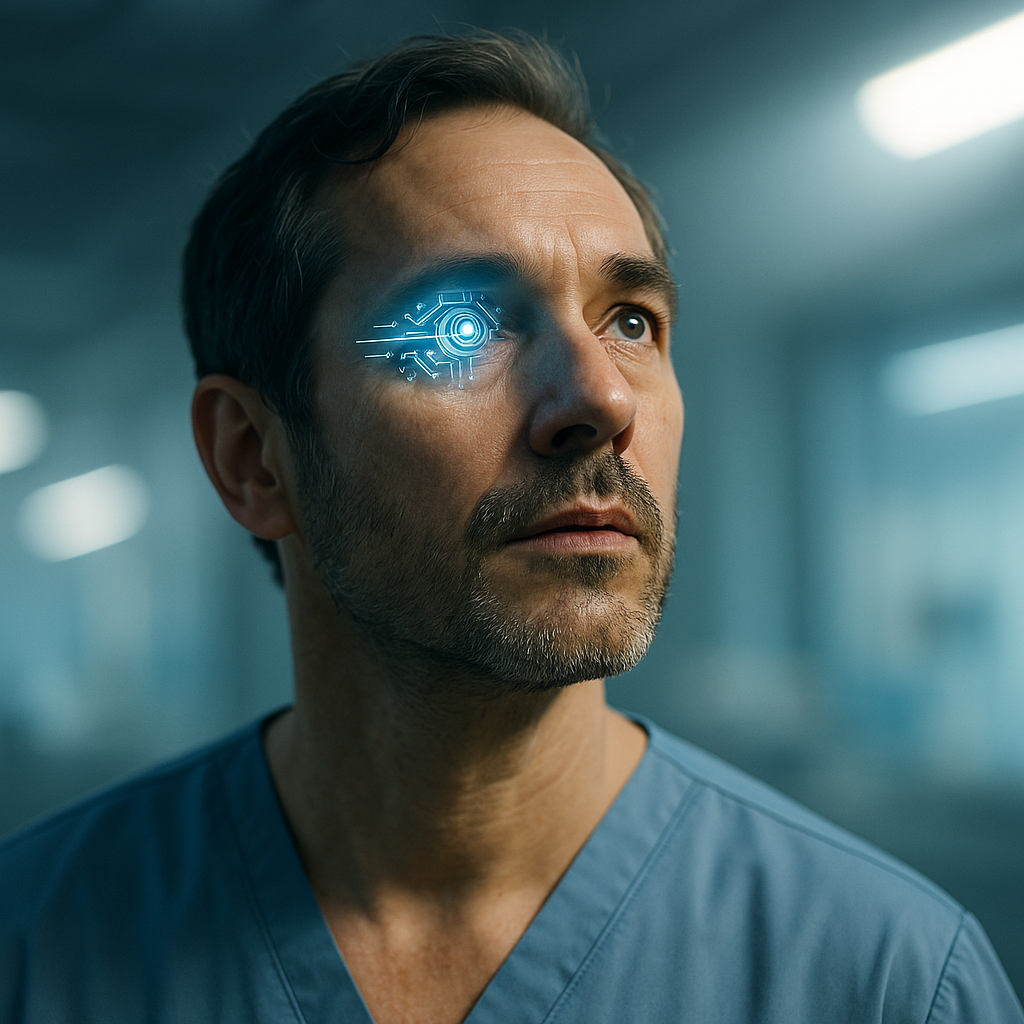
Created by Science Corporation, a US-based biotech firm, the device works hand-in-hand with a pair of special video glasses that record real-time images of the world.
These glasses transmit footage to a pocket computer, which transforms it into an electronic signal. The signal is then sent wirelessly to the implant beneath the retina. The microchip relays this information through the remaining healthy retinal cells to the brain, where it is interpreted as visual input.
Dr Mahi Muqit, senior consultant at Moorfields, called the achievement historic:
“In the history of artificial vision, this represents a new era. It has never been done before.”
Wireless and Minimally Invasive
The implant is tiny, wireless, and powered by light energy — no cables or external batteries required. Surgeons can implant it in under two hours, and most patients return home the same day.
Afterward, patients go through rehabilitation to train their brains to interpret the new signals. At first, they see only flickers of light, but over time these merge into recognizable shapes and letters.
Beyond Sight: The Emotional Impact
For many, the experience is as emotional as it is technical. Being able to perceive letters, faces, or light after years of blindness brings a renewed sense of independence.
Experts describe this as a critical step toward full artificial vision. Future versions are expected to include more electrodes for higher image resolution, offering sharper, more natural vision.
Dr José-Alain Sahel, a leading ophthalmologist and pioneer in the field, said:
“Each patient who can read a word again shows that neuro-prosthetic sight is no longer science fiction.”
A Global Hope for Millions
With 200 million people worldwide affected by macular degeneration, this innovation could transform countless lives. While it does not yet cure blindness, it restores something precious — the connection between light and the mind.
Clinical trials are now expanding in Europe and the United States, and approval for public use could arrive as soon as 2027.
For patients like Sheila Irvine, the technology means far more than science alone. “It’s a gift I never thought I’d experience again,” she said.